GST Implementation in Bhutan
Bhutan’s GST began in January 2026. Learn the key rules, compliance needs, and how aBit helps hotels, retail, and businesses become fully GST-ready.
Somita
Author
What Businesses Must Know in 2026
Bhutan officially implemented the Goods and Services Tax (GST) on 1 January 2026, introducing a modern, nationwide tax system that replaces the earlier sales tax structure.
This reform marks a major step toward transparent taxation, digital compliance, and long-term economic sustainability.
Key Highlights of GST in Bhutan
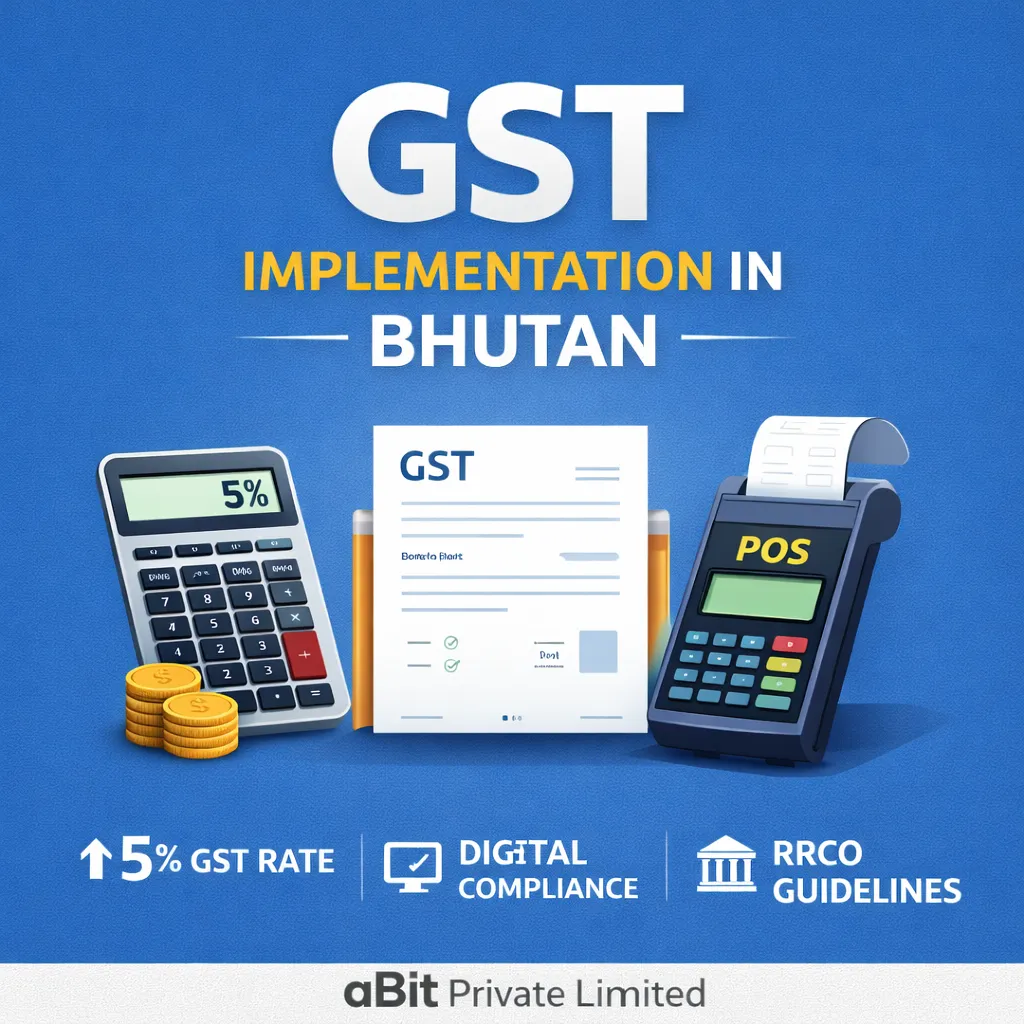
5% Standard Rate
Most goods and services are taxed at a uniform 5%, simplifying pricing and compliance for businesses.
Business Registration Threshold
Businesses with an annual turnover of Nu. 5 million or more must register for GST, while smaller businesses may opt for voluntary registration.
Consumption-Based System
GST is ultimately paid by the final consumer, removing cascading taxes and improving fairness.
Exports remain zero-rated, supporting Bhutanese participation in global markets.
Digital Tax Administration
GST operates through Bhutan’s online taxation system, enabling digital registration, filing, and compliance monitoring.
Why GST Matters for Businesses
GST is more than a tax change.
It directly impacts:
- Billing and invoicing systems
- Accounting and financial reporting
- POS, PMS, and ERP software
- E-commerce and payment integrations
To operate smoothly, businesses must ensure their systems are fully GST-compliant and digitally aligned.
How aBit Supports GST-Ready Businesses
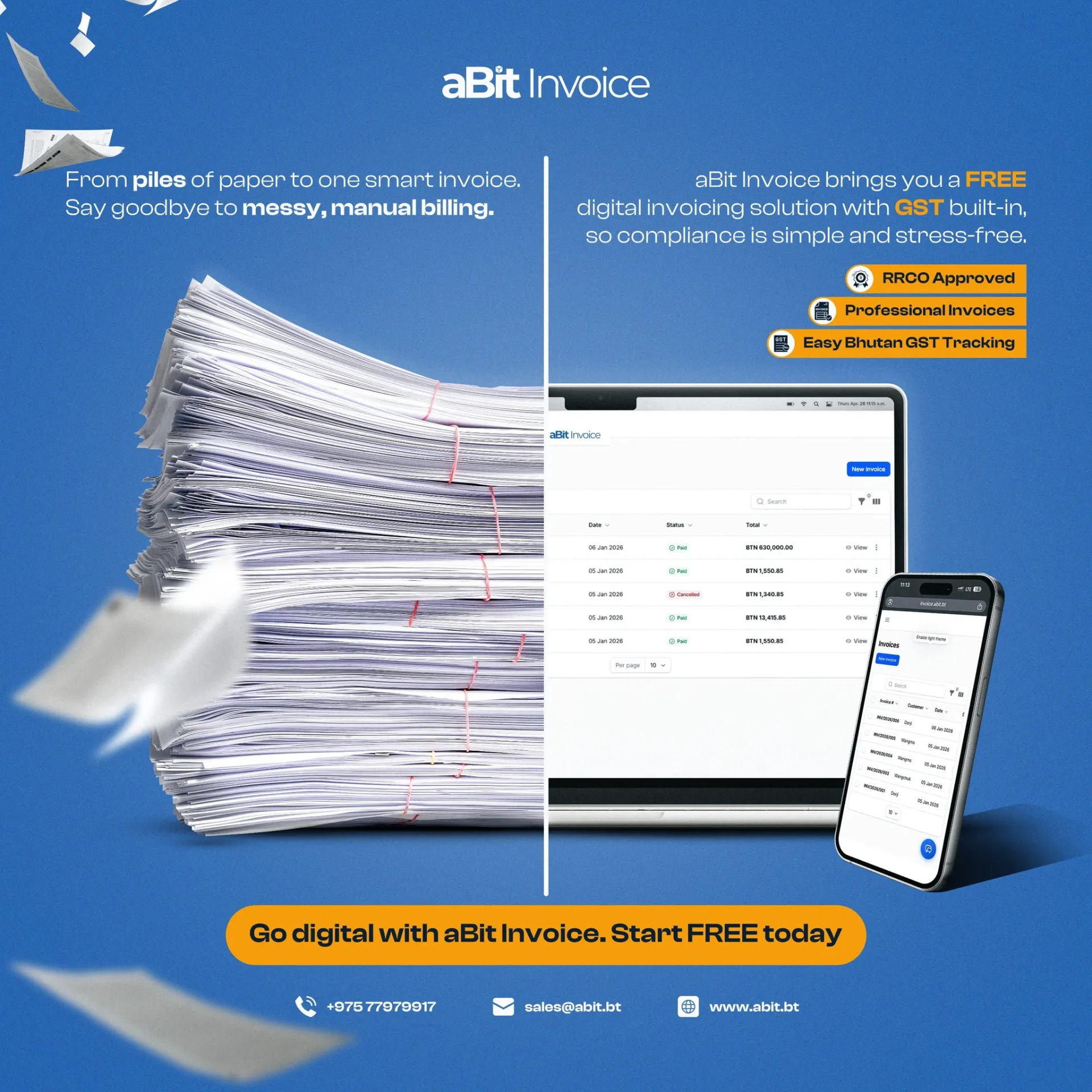
Since the rollout of GST in January 2026, aBit Private Limited has been actively helping hotels, retail outlets, and other businesses across Bhutan achieve full GST compliance in line with RRCO requirements.
Through the implementation of GST-ready billing, POS, PMS, and accounting software, along with system setup, guidance, and operational support, aBit enables organizations to transition smoothly into the new tax framework.
Our teams continue to ensure accurate tax application, compliant reporting, and uninterrupted business operations in the evolving GST environment.
Moving Forward
GST represents a turning point in Bhutan’s economic modernization.
Businesses that adapt early, digitize operations, and maintain compliance will be best positioned for sustainable growth in the years ahead.